Springs · Orillia
Garage Door Balance Adjustment
You pulled the red cord to move the door by hand during the power cut, lifted it to about waist height and let go. Instead of staying put, it kept climbing on its own and thumped into the fully open stop.
Garage Door Balance Adjustment
In plain words
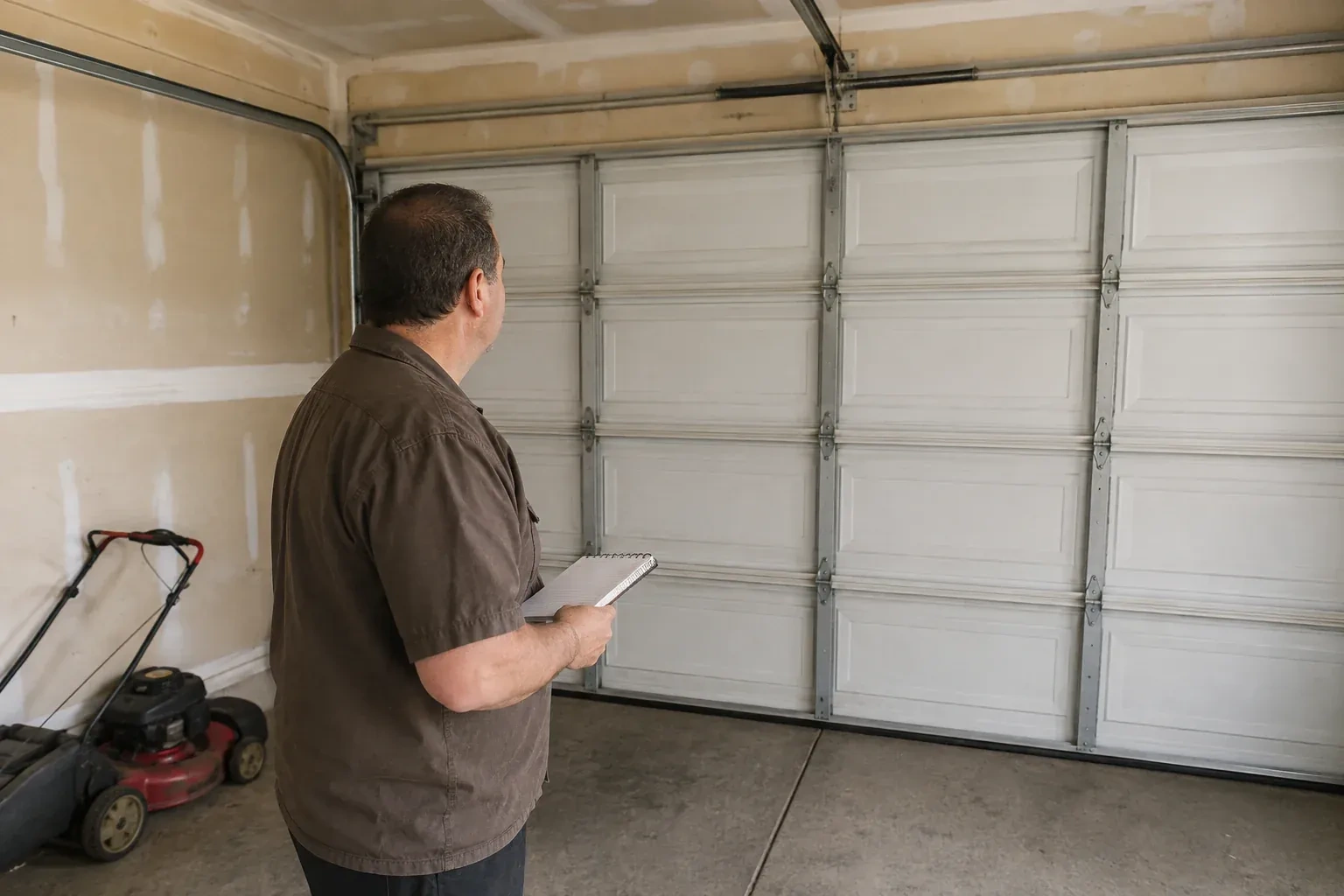
The whole service is built around one simple test that door manufacturers and safety bodies describe the same way. With the opener released, the door is lifted by hand to roughly a metre off the floor and let go. A balanced door stays where it is. One that drifts upward is carrying too much spring tension; one that sinks is carrying too little. The technician reads that behaviour at several heights, checks the door is level across its width, and then adjusts the counterbalance a quarter turn at a time, testing to the manufacturer's specified height and tolerance, until the door meets that standard and moves smoothly.
How the visit goesThe opener has started to groan on the way up. The door climbs slowly, hesitates near the top, and on the way down it sometimes stops a hand's width above the floor and reverses, as if something were in the way when nothing is.
Orillia
How the visit goes
Cables, drums and whether the door sits level
A door that is out of level is usually a cable story rather than a spring story. The technician checks that each cable wraps its drum in a single neat layer with the same number of wraps on both sides, that the drum set screws are tight on the shaft, and that neither cable is frayed or rusting at the bottom bracket. A tape across the bottom of the door in the closed position shows whether one corner sits high. If it does, the cables are reset on the drums so the door is level before spring tension is judged, because a crooked door binds in its track and feels heavy regardless of how the springs are wound.
Removing the friction that made the door feel heavy
Where the inspection found drag, it is dealt with before the springs are judged. Seized or worn rollers are swapped for new ones, one hinge at a time so the door never leaves its track. Track sections knocked out of line are eased back plumb and their brackets tightened to the jamb; a dent is dressed out or the section replaced. Hinges with play are replaced and their screws driven into sound material. The springs, hinge pins, roller stems and bearings then receive a light coat of garage-door lubricant. After this the door is lifted again, and it is common for the heaviness to be largely gone before any turns are added.
What the springs still have left
Part of the visit's value is knowing where the springs stand. If they were adjusted and left in place, you will have been told roughly how much life they appear to have and what signs mark their end: a door that grows heavy again within a season, a coil gap, or rust flaking from the wire. If they were replaced, the door starts a new cycle count and the note by the opener says when they went in. Either way, you can plan the next spring work on your own schedule rather than on the morning the car needs to leave and the door refuses to lift.
Garage Door Balance Adjustment
In the van
- Track clamps or locking pliers
- Cable drums
- Replacement hinges
- Door scale
- Winding bars
What affects the quote
Same fees day, night or weekend
1Extension-spring containment and pulleys
On an extension door, a missing containment cable is added and worn pulleys are replaced with the adjustment. Each is a small parts line on the quote.
2Door height and lift type
Taller doors and high-lift or vertical-lift hardware carry more spring turns and different drums, so setting and testing them takes longer than a standard seven-foot door.
3Single or double door
A double door commonly carries more spring than a single, but the exact count follows the manufacturer's engineered hardware package for that door's weight rather than width alone: one, two or more torsion springs, or one or two extension springs per side. More springs means more adjustment and testing.
Garage Door Balance Adjustment: questions
How often does a garage door need a balance adjustment?
There is no fixed interval; the door tells you. Many doors go years between adjustments, especially when they are lubricated and the springs were sized correctly. A hand test each season is the reliable guide: if the released door holds at about a metre and stays fully open, it is fine. When it starts to drift or sink, that is the time.
How long do garage door springs last?
Springs are rated in cycles, one cycle being an open and a close. A standard residential spring is commonly rated for around ten thousand cycles, which for a family using the door several times a day works out to roughly seven to ten years. Higher-cycle springs are available. As a spring nears its rating it loses tension, which is often why a balance adjustment is needed.
Can the opener's force setting be turned up instead of adjusting the springs?
The opener is built to move a balanced door, and its force limit is what makes it stop and reverse on contact. Raising that limit to lift a heavy door pushes the safety behaviour out of its intended range and works the motor and gears hard. The sound order is to balance the door first, then set the opener to suit it. Both are done in the same visit.
Springs & Hardware
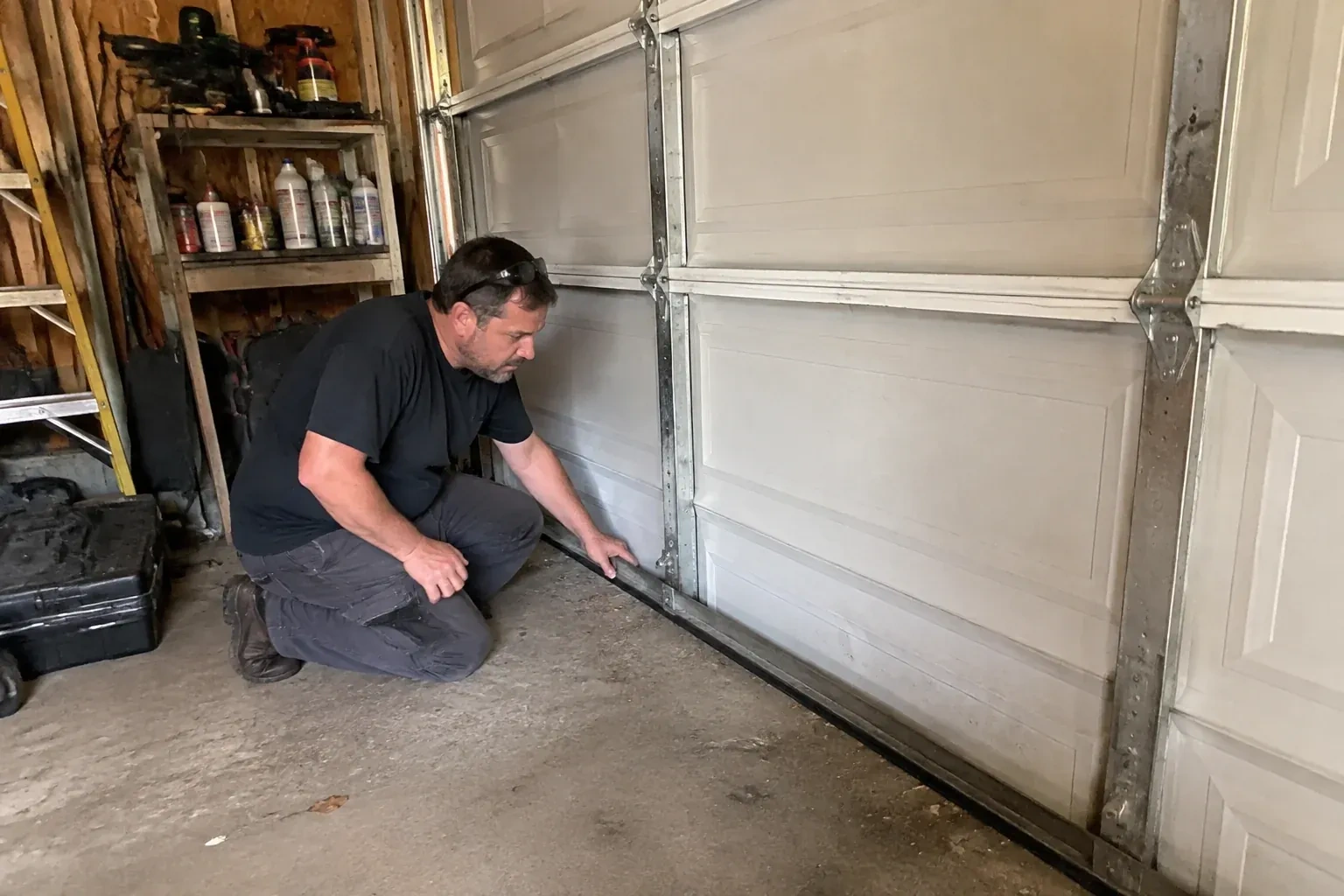
- Garage Door Hinge ReplacementWatching from inside as the door opens, you can see the gap between the second and third panels…
- Garage Door Track Repair or ReplacementBacking out this morning, the mirror caught the track beside the door.
- Garage Door Cable ReplacementThe car bumper kissed the door on the way in.
Garage Door Balance Adjustment near you
Residential and commercial customers in Orillia come to us for spring and cable replacement, off-track resets, opener diagnosis and replacement, remote and keypad programming, weatherstrip and seal work, balance adjustments, panel repair and new door installation. Each service is explained on its own page in plain language.