New Doors · Orillia
High-Lift Garage Door Conversion
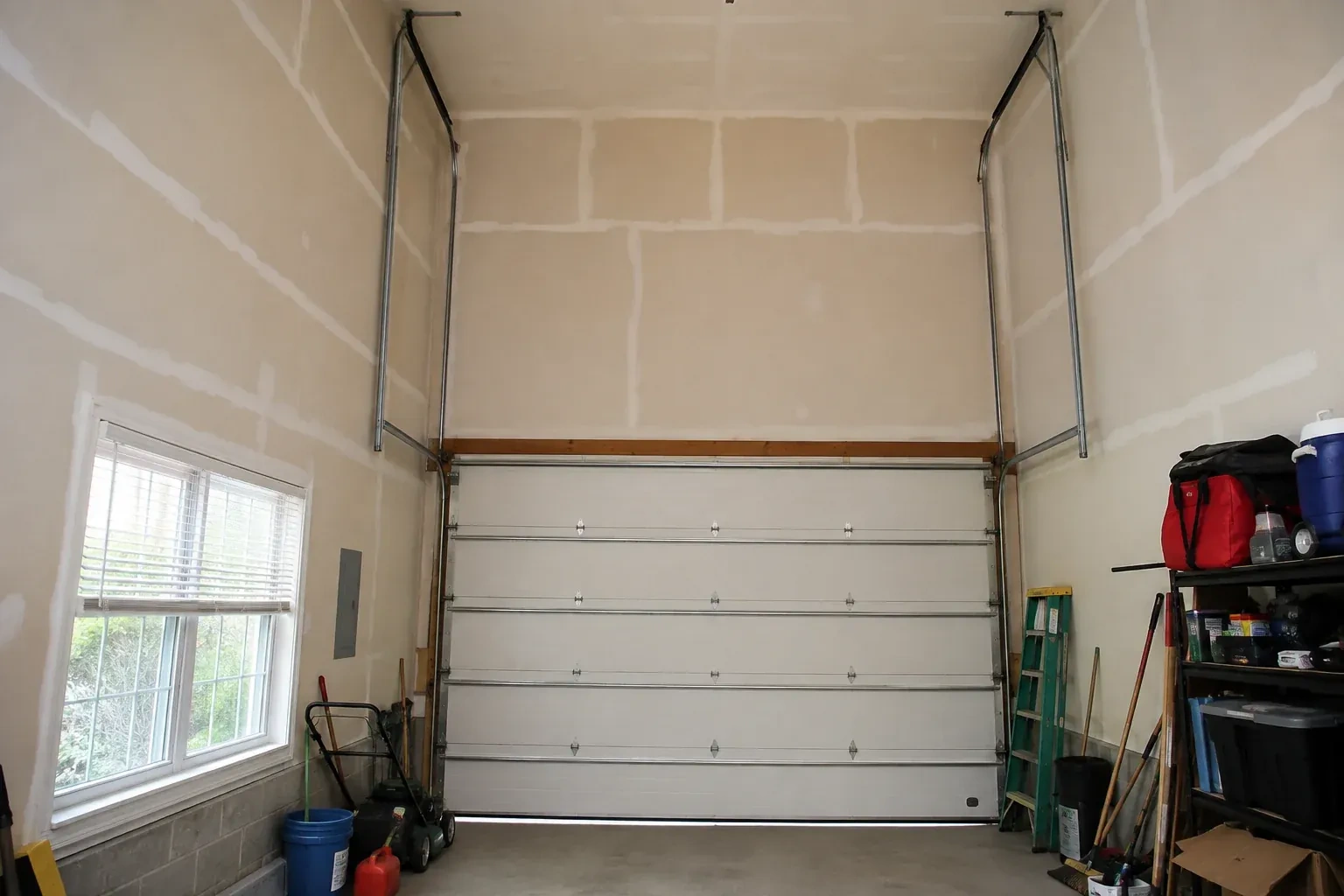
Your new vehicle lift fits the floor plan, but the open garage door crosses the space above it. The ceiling is high enough; the standard track simply turns too soon and leaves the panels hanging over the raised vehicle.
High-Lift Garage Door Conversion
In plain words
A high-lift project can often retain sound door sections while changing the hardware that guides and balances them. Their condition, reinforcement, hinges and rollers are inspected first, because the door still has to travel smoothly through a steeper path. New track geometry is paired with drums that manage the changing cable radius, cables of suitable length and torsion springs chosen for the actual door. This selective approach focuses the conversion on the components affected by the new movement while keeping compatible material in service.
How the visit goesThe door works well, although the open panels sit far beneath a sloped or raised ceiling. You are exploring whether the track, counterbalance and operator can be redesigned to follow the room more closely.
Orillia
How the visit goes
Review the counterbalance as a system
The existing springs are not judged by appearance alone. Door weight, added vertical travel, drum geometry, cable path, shaft length and desired cycle characteristics all shape the new counterbalance specification. The technician records spring tags where present, shaft diameter, bearing locations, drum type and cable condition, then uses the proposed layout to calculate the replacement set. This system review is what lets the door feel controlled from floor to open position, even though the panels now follow a substantially different route.
Coordinate the top section through the turn
The top panel has a distinct job as it moves from the wall into the overhead track. Its roller fixtures and position are adjusted to follow the selected transition while keeping the section aligned with the others. Technicians move the door in small controlled stages, watching hinge action, roller engagement and clearance at the header and curve. Where suitable components are required, they are fitted as part of the design. Care at this point helps the door seal when closed and travel smoothly into its raised resting position.
Simple signs that invite a service check
The handover gives you a reference for normal operation: level travel, consistent cable winding, rollers centred in track and a smooth transition from vertical to horizontal. Arrange a check if the door begins leaning, a cable looks slack or frayed, a roller approaches a track edge, or the operator repeatedly changes sound. Leaving the door in a stable position and keeping the area clear supports an orderly visit. Early observation helps a technician focus on the changed component while the documented conversion remains easy to trace.
High-Lift Garage Door Conversion
In the van
- Calculated torsion springs
- Matched lift cables
- Torsion shaft
- Braced back hangs
- Track and flag brackets
What affects the quote
Same fees day, night or weekend
1Condition of reusable sections
Sound panels and hardware may remain in service, while worn hinges, rollers, top fixtures or damaged reinforcement add related work to the conversion.
2Counterbalance component design
Spring specification, drum profile, cable length, shaft arrangement, bearings and centre supports are calculated around the door and proposed travel rather than priced as isolated pieces.
3Track and support configuration
Extended verticals, transition curves, horizontal angles, back hangs, brackets and bracing vary with the building geometry and available attachment locations.
High-Lift Garage Door Conversion: questions
How is the door tested after conversion?
Testing starts with controlled manual travel. Technicians observe balance at several positions, level movement, roller engagement, cable seating, clearances and transition through the curves. After the mechanical system performs properly, powered cycles verify open and closed limits, operator behaviour, emergency release and applicable protective functions. Fasteners, supports and component records receive a final review before demonstration.
Can decorative hardware or added insulation affect the design?
Anything that changes door weight can influence counterbalance selection. Overlay trim, reinforcement, glazing, insulation additions and multiple coating layers are therefore recorded during assessment. If weight is added after conversion, the manual balance should be reviewed. Sharing planned door upgrades early lets the spring, drum and cable design reflect the configuration that will actually be operated.
Does cold weather affect a high-lift system?
Cold, moisture and road salt can influence metal surfaces, seals and lubrication just as they do on other garage doors. The taller track path also makes unobstructed movement and correct cable winding important to observe. Follow the installed door and opener manuals for seasonal care, keep lower hardware clean, and arrange service when movement or sound changes noticeably.
Installation & Upgrades
- Insulated Steel Garage Door InstallationThe room above your attached garage stays chilly while the steel door below feels cold to the touch.
- Wind-Rated Garage Door ReplacementYour renovation drawings call for a garage door with a stated design pressure, yet the existing…
- Carriage-House Garage Door InstallationThe existing door has reached the point where panels, rollers and finish all look tired.
High-Lift Garage Door Conversion near you
Residential and commercial customers in Orillia come to us for spring and cable replacement, off-track resets, opener diagnosis and replacement, remote and keypad programming, weatherstrip and seal work, balance adjustments, panel repair and new door installation. Each service is explained on its own page in plain language.