Repairs · Orillia
Garage Door Tune-Up
Since the first cold snap the door has been sluggish. It climbs slowly, hesitates near the top and the opener motor sounds strained.
Garage Door Tune-Up
In plain words
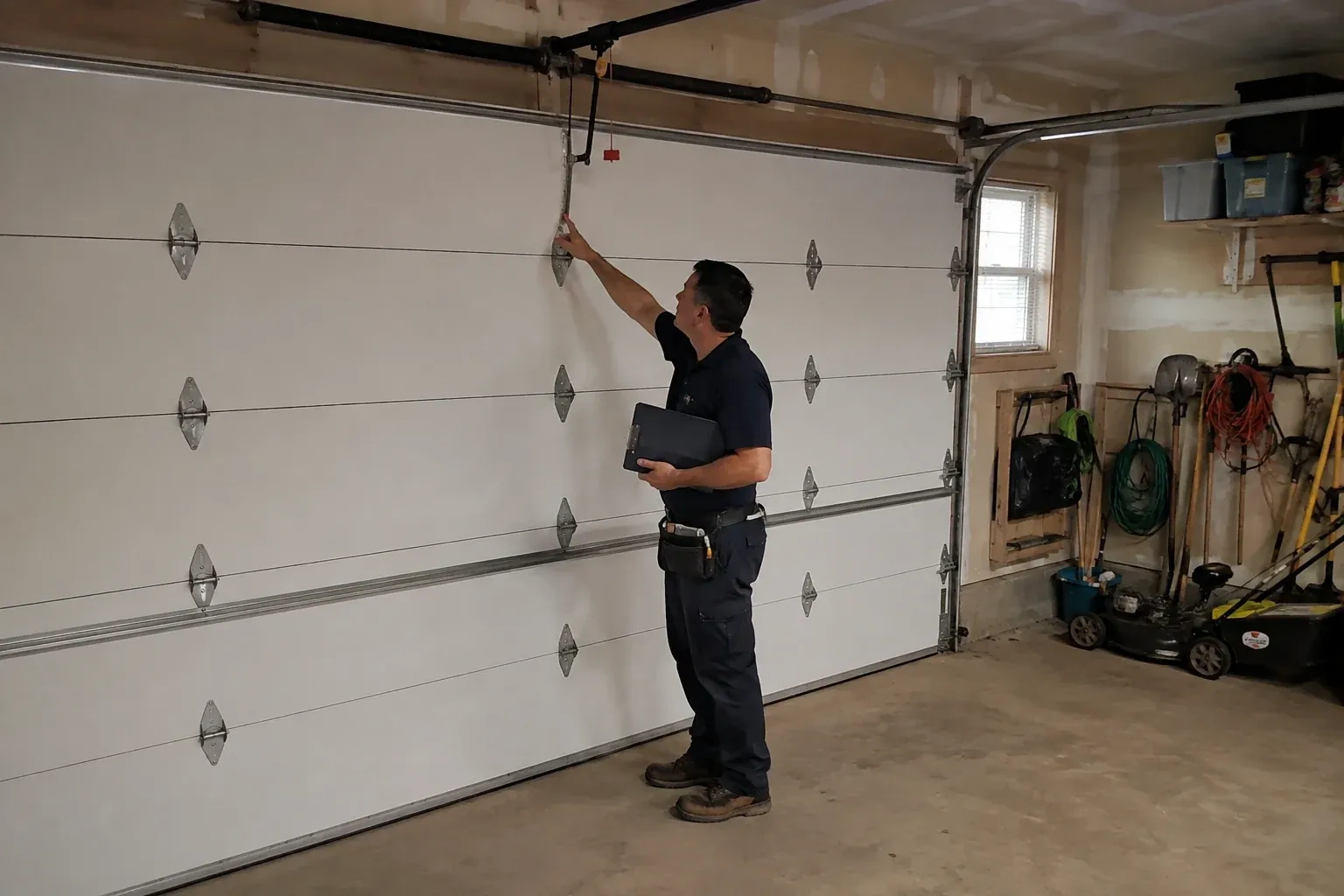
The visit follows a set order. First the technician watches a full cycle, up and down, from a safe distance, noting where the noise, shaking or hesitation lives. Then the door is closed and inspected hardware by hardware, from the bottom brackets to the torsion shaft. The manual release is pulled and the door is lifted by hand to feel the balance. Only then does the work start: fasteners, lubrication, opener adjustments and sensor alignment. A second cycle and the reversal tests close the visit, and the difference between the first run and the last is the measure of the tune-up.
How the visit goesYou moved in a few months ago and have no idea when the garage door was last looked at. The previous owners left the remotes on the counter and no paperwork, and the door works, but it works loudly and unevenly.
Orillia
How the visit goes
Seals, weatherstrip and the threshold
The bottom seal is checked along its whole length for tears, flattening and stiffness, and the threshold is looked at for the low spots where water pools and freezes. The jamb and header weatherstrip are pressed to see whether the rubber or vinyl still flexes or has gone hard, and the technician notes any daylight showing when the door is closed. Because the opener's travel limit decides how firmly the door presses onto its seal, the two are read together: a crushed seal often means the down limit is set too far, and a gap often means the door is stopping early. This part of the check matters most before winter.
Setting travel and force on the opener
The opener has two settings that drift over time: how far the door travels, and how much force it applies before deciding something is in the way. The technician runs the door and adjusts the down travel so the door seals firmly on the floor without bowing the top section or crushing the seal, and the up travel so it stops fully open without the trolley hitting the stop. Force is set as low as will reliably close the door, because a low force setting is what lets the door reverse gently on contact. On a sectional door the arm is kept from passing straight up and down at the closed position, which protects the top section and the rail.
Care between visits
A tuned door stays tuned longer with a little attention from you. Every few months, put a small amount of the same silicone- or lithium-based garage door lubricant on the hinge pins and roller bearings and work the door a few times. Wipe the tracks clean and leave them dry. Keep the photo-eye lenses clear of dust and cobwebs, and keep bins and bicycles from leaning on their brackets. Rinse the door and the lower hardware after winter and treat the seals with silicone spray. Listen once a month as the door runs; a new sound is easier to address early. Anything to do with springs, cables or bottom brackets is left for the technician.
Garage Door Tune-Up
In the van
- Socket set and drivers
- Jamb and header weatherstrip
- Bottom seal (astragal)
- Silicone or lithium garage door lubricant
- 2x4 test block and tape measure
What affects the quote
Same fees day, night or weekend
1Single or double door
A double-width door has more hinges, rollers and track to inspect and lubricate, a heavier counterbalance and usually a strut or two on the top section, so it takes longer than a single door.
2Condition of rollers and hinges
Worn rollers or a cracked hinge found during inspection can be replaced on the spot if you choose, and each replaced part is listed as its own line on the quote.
3Bottom seal and weatherstrip
Treating existing seals is part of the tune-up; replacing a torn bottom seal or renewing hardened jamb weatherstrip is additional material and time, quoted by the length involved.
Garage Door Tune-Up: questions
Will the tune-up include replacing worn parts?
Small wear items found on the day, such as a roller or a hinge on a middle section, a bottom seal or a few fasteners, can often be replaced during the visit if you agree and the part is on the truck. Larger items, including springs, cables, drums, bottom brackets, a bent track or an opener gear, are written up as separate repairs with their own quote so you can decide with the facts in hand rather than under a raised ladder.
How do I test the safety reversal at home?
Two tests, once a month. With the door open, press close and wave a broom handle through the photo-eye beam near the floor: the door should stop and go back up. Next, set a 2x4 flat on the concrete in the middle of the opening and press close: the door must reverse when it meets the board. If it stops on the board without reversing, the down travel or force setting needs adjustment, and if it fails after that, book a visit.
How long does a tune-up take?
For a single or double residential door with an opener, allow roughly an hour to two hours on site. The inspection and the two observed cycles take a fixed amount of time; the rest depends on how many fasteners have loosened, whether the sensors need realigning and whether you approve a small part replacement, such as a worn roller, during the same visit. Spring or cable work, if found necessary, is scheduled as its own job.
Repair & Maintenance
- Off-Track Garage Door ResetThe door came down fine but with a scraping noise, and now the vertical track on one side is bowed…
- Garage Door Panel ReplacementYou misjudged the last metre of the driveway and felt the bumper meet the door.
- Garage Door Bottom Seal ReplacementAfter a spring rain there is a puddle inside the door that reaches the tires.
Garage Door Tune-Up near you
Residential and commercial customers in Orillia come to us for spring and cable replacement, off-track resets, opener diagnosis and replacement, remote and keypad programming, weatherstrip and seal work, balance adjustments, panel repair and new door installation. Each service is explained on its own page in plain language.