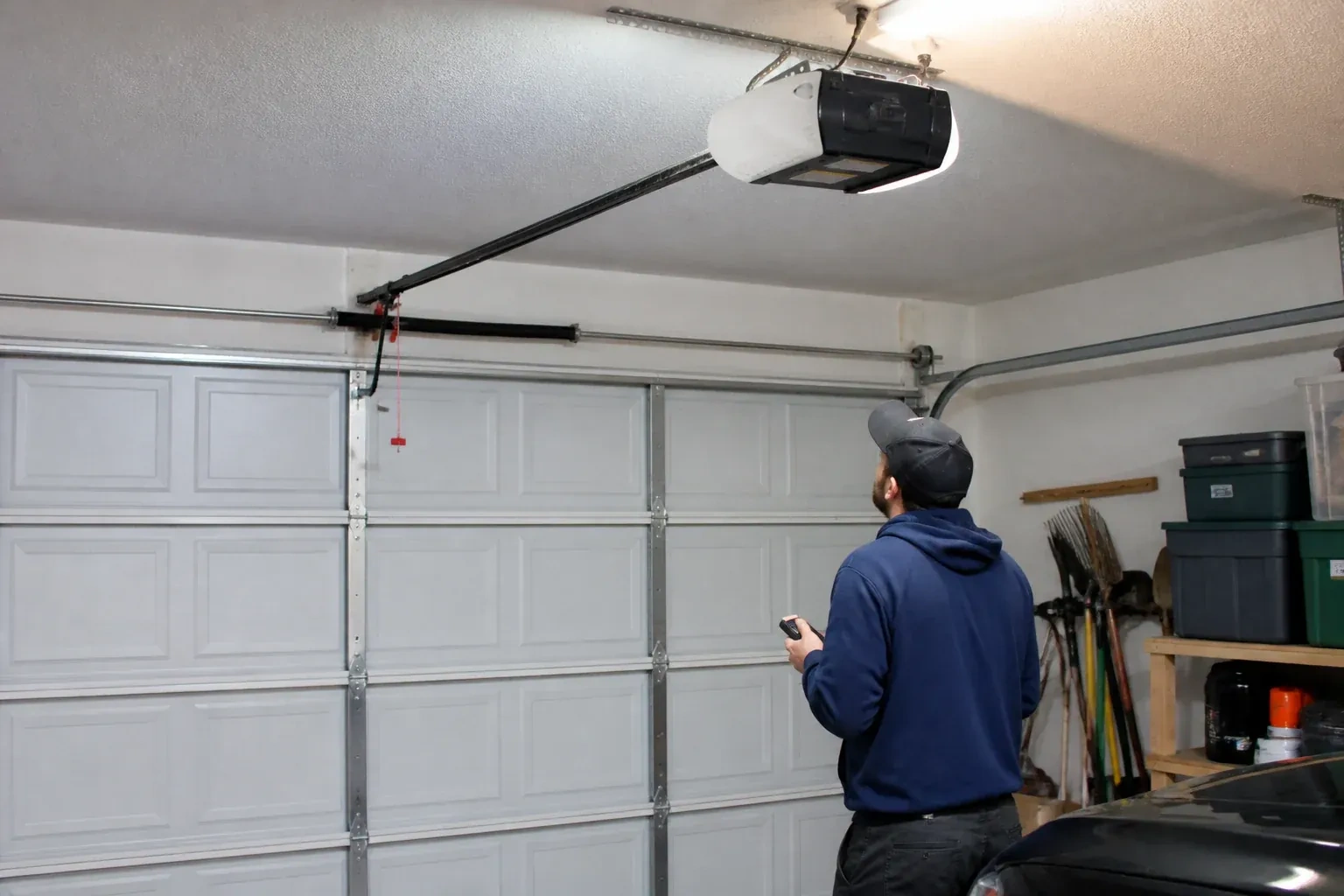
Openers · Orillia
Garage Door Opener Diagnosis and Repair in Orillia
For a few days there was a grinding sound whenever the door started moving. Now the motor spins freely and the door stays exactly where it is.
Garage Door Opener Diagnosis and Repair
In plain words
Think of a command travelling through the system. Your thumb presses a button; the radio signal reaches the receiver; the logic board decides to move; the motor turns; a gear drives a chain, belt or screw; the trolley pulls the arm; the arm moves the door. A fault at any link produces the same result from where you stand: nothing happens. Diagnosis walks that chain in order and finds the broken link, whether it is a flat remote battery at the start or a stripped gear in the middle. Working from one end keeps the fix small and the explanation simple.
How the visit goesNothing. No light, no click, no hum from the unit on the ceiling. The remote is dead, the wall button is dead, the keypad is dead. It worked yesterday evening, before the storm knocked the power out for an hour and brought it back with a flicker.
Orillia
How the visit goes
What the blinking lights are saying
Many openers describe their own fault. The head unit flashes its light bulbs, or an up arrow and a down arrow, in a numbered pattern, and some display a code on the wall control. The technician counts the pattern, identifies the exact model from its label, and matches the two on the manufacturer's chart: one family of codes means the sensor circuit is open or obstructed, another means the motor was told to move and nothing turned, another means the door needed more force than the limit allows. The code narrows the search; a hands-on test then confirms it, because a wiring fault can imitate a sensor fault.
Capacitor and motor work
On an AC opener that hums and clicks but never turns, the start capacitor is the first suspect. It is discharged, tested and replaced with one of the same rating, a routine job that returns a dead-sounding opener to normal in many cases. If the motor still fails to turn with a good capacitor, the technician checks for a seized shaft, burnt windings or a failed thermal cut-out, and confirms the motor is not simply being stalled by a locked or bound door. A motor replacement is weighed against the age of the unit and the availability of the part, and that judgement is explained before any decision.
A clear path if the unit is near its end
When the diagnosis finds an opener that is safe today but not for long, you leave with a plan rather than a surprise. You know which part is wearing, what the warning signs will be, and how the decision to replace is likely to present itself. If the unit is one the industry recommends replacing, such as a head unit with no photo eyes, that is set out plainly along with what a modern belt or direct-drive unit changes: quieter running, battery backup, soft start and stop, and sensors that meet the current standard. The door is left working and safe while you decide.
Garage Door Opener Diagnosis and Repair
In the van
- Start capacitor
- Logic board or receiver
- Travel limit switch or RPM sensor
- Trolley and carriage
- Bell wire and clips
What affects the quote
Same fees day, night or weekend
1Season and weather
A frozen seal, a stiff door and an unheated garage in the cold months add steps to a diagnosis, such as freeing the door and re-lubricating for low temperatures, and the quote allows for them.
2Distance to your door
Travel is part of the visit. An address across town and a rural property at the end of a concession road involve different driving, and the quote reflects the trip.
3Ceiling height and access
A standard-height garage puts the head unit in easy ladder reach. High ceilings, high-lift tracks, storage lofts or a car that cannot be moved add setup time and sometimes a taller ladder.
Garage Door Opener Diagnosis and Repair: questions
Why will the door close only while I hold the wall button?
That is a built-in behaviour, not a new fault. When the sensor circuit reports a problem, most openers refuse to close from a remote but allow a constant-pressure close from the wall control, because someone standing there can see the doorway. It is a strong signal that the photo eyes or their wiring need attention, and once the sensor issue is corrected the door closes normally from every control again.
What is the balance test, and is it something I can do?
Yes, with care. Close the door, pull the red release handle, and lift the door by hand, keeping fingers away from the panel joints. It should rise easily and stay where you leave it around waist to shoulder height. A door that drops, shoots up, or feels heavy has a spring problem and should not be run with the opener until a technician has seen it. Reconnect by running the opener or lifting until the trolley clicks in.
What should I check before calling?
Look for the simple things: is the opener plugged in and its light working, has the wall control's lock indicator started blinking, does another remote work, is anything sitting in the path of the sensors, and are the little sensor lights steady. Note what the motor does when you press a button. Do not try to lift a door that is stuck if a spring looks broken. Whatever you find, tell the technician; it shortens the diagnosis.
Openers & Access
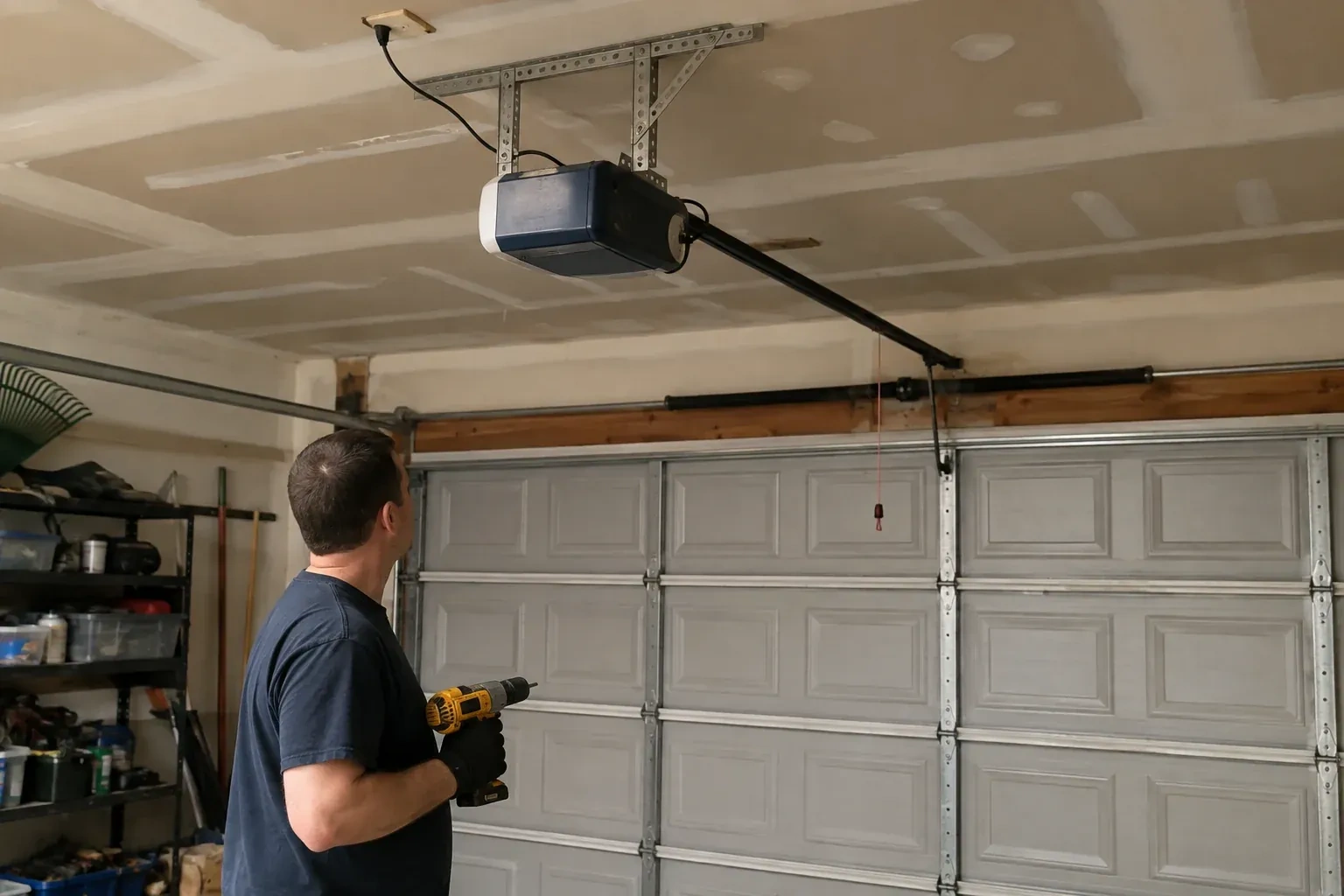
- Belt-Drive Opener RepairThere is a new squeal from the front of the rail, up near the header, on every cycle.
- Garage Door Opener ReplacementSince the storm the door behaves oddly: it reverses halfway down for no reason, the light flickers…
- Photo-Eye Sensor Alignment or ReplacementThere are no sensors at the floor at all, or a previous owner has wired the pair together up beside…
Garage Door Opener Diagnosis and Repair near you
Residential and commercial customers in Orillia come to us for spring and cable replacement, off-track resets, opener diagnosis and replacement, remote and keypad programming, weatherstrip and seal work, balance adjustments, panel repair and new door installation. Each service is explained on its own page in plain language.