Openers · Ramara
Garage Door Remote and Keypad Programming in Ramara
The remote opens the door only when you are almost underneath it. From the end of the driveway you press five or six times and nothing happens.
Garage Door Remote and Keypad Programming
In plain words
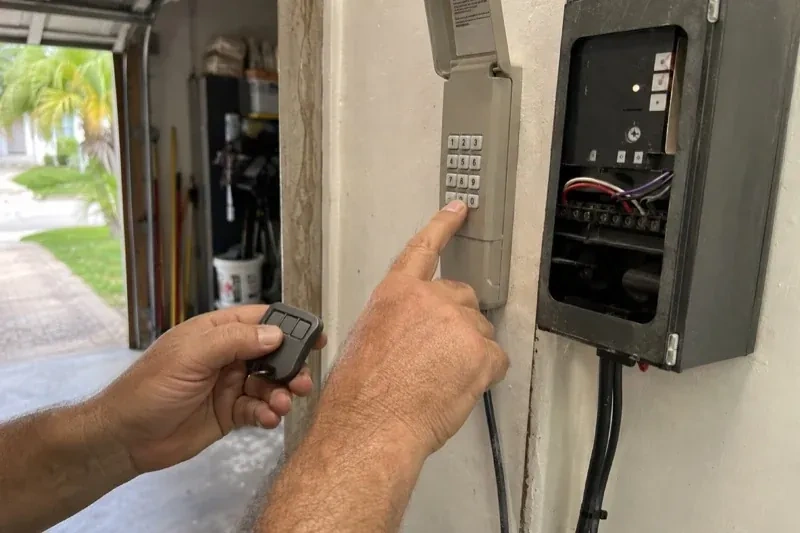
An outdoor wireless keypad lets the household in without a remote, and programming it properly is more than typing a code. The technician pairs it to the opener, sets a personal code you choose, and on many models adds temporary codes that expire after a set number of hours or openings, handy for a cleaner or a delivery. The keypad is programmed before it is screwed to the wall, fitted with fresh batteries suited to a cold climate, and mounted where a child cannot reach it and the door is in view. Codes stay private; they are not written on the paperwork.
How the visit goesThe new car has three buttons in the mirror for garage doors. You held the old remote up to it as the manual said, the light in the car changed, and yet the door ignores it completely. The handheld remote works fine.
Ramara
How the visit goes
Batteries and contacts before anything else
A surprising share of dead remotes are simply hungry. The technician opens each remote and keypad, reads the cell type printed inside, and checks voltage and contacts. Coin cells lose strength gradually, so a remote that works only up close is often on its last legs rather than out of range. Outdoor keypads run on small cells that sag in the cold and on contacts that salt spray and condensation corrode over a few winters. Fresh cells of the specified type and a cleaned contact are fitted before any programming attempt, because a weak transmitter can fail to pair even when everything else is right.
Training the buttons in the car
A vehicle's built-in garage button often learns in two stages on rolling-code openers. First the car learns the remote: with the handheld remote carrying a fresh cell held close to the mirror or console, the vehicle button and the remote button are pressed together until the indicator changes. Second, the opener learns the car: the technician presses the head unit's learn button and returns to the vehicle inside the window that follows to press the trained button until the door moves. Some vehicle systems follow a different sequence with no handheld remote, so the vehicle and opener instructions are checked first. Where an older in-car system cannot hear a newer opener, a small bridge module is added.
Codes kept private, visitors kept temporary
Your keypad code is yours alone. It is not written on the invoice or left in the garage, and it is chosen to be something other than the house number or a birth year. On keypads that support them, you have learned to set a temporary code for a cleaner, a trade or a house-sitter that stops opening the door after a set number of hours or uses, and you know how to change the main code yourself from the instructions. If a code is ever shared too widely, changing it is a two-minute job rather than a service call.
Garage Door Remote and Keypad Programming
In the van
- In-vehicle compatibility bridge module
- Add-on rolling-code receiver kit
- Universal multi-generation remote
- AAA and nine-volt keypad batteries
- Contact cleaner and fibreglass brush
What affects the quote
Same fees day, night or weekend
1Add-on receiver for an older opener
Converting a fixed-code opener means a receiver kit, wiring to the wall-button terminals and new remotes, quoted as an upgrade rather than a programming call.
2Opener check-up before programming
Confirming power, lock mode, sensors and door travel is included; any repair those checks reveal is discussed and quoted before it is done.
3Receiver or logic board fault found
If a known-good remote also fails, the receiver or board is the cause; its diagnosis and replacement are quoted separately from programming.
Garage Door Remote and Keypad Programming: questions
My opener has tiny switches inside the remote. Can I still get remotes for it?
Those are fixed-code openers from before rolling code, and their original remotes are often discontinued. Rather than hunt for old stock, an add-on rolling-code receiver is fitted: it wires to the wall-button terminals, plugs into the ceiling outlet and brings new remotes and a keypad with it. The opener must already have photo eyes at the floor; if it has none, a new opener is the sound recommendation.
How many remotes can one opener store?
It depends on the unit. Older head units and add-on receivers hold a handful of devices, often fewer than ten, while newer openers store dozens of remotes, keypad codes and vehicle buttons. When a memory is full, the oldest entry may be overwritten or the new device refused. Taking stock of which controls are still in use, and clearing the ones that are not, keeps space for the devices that matter.
Can I give a visitor or cleaner a code that stops working?
Many keypads allow a temporary code alongside your main one. It can be set to expire after a chosen number of hours, up to several days, or after a set number of openings. Once expired it no longer opens the door, though on some models it can still close it. That suits a cleaner, a trade or a house-sitter better than sharing the main code, and it can be set again whenever needed.
Openers & Access
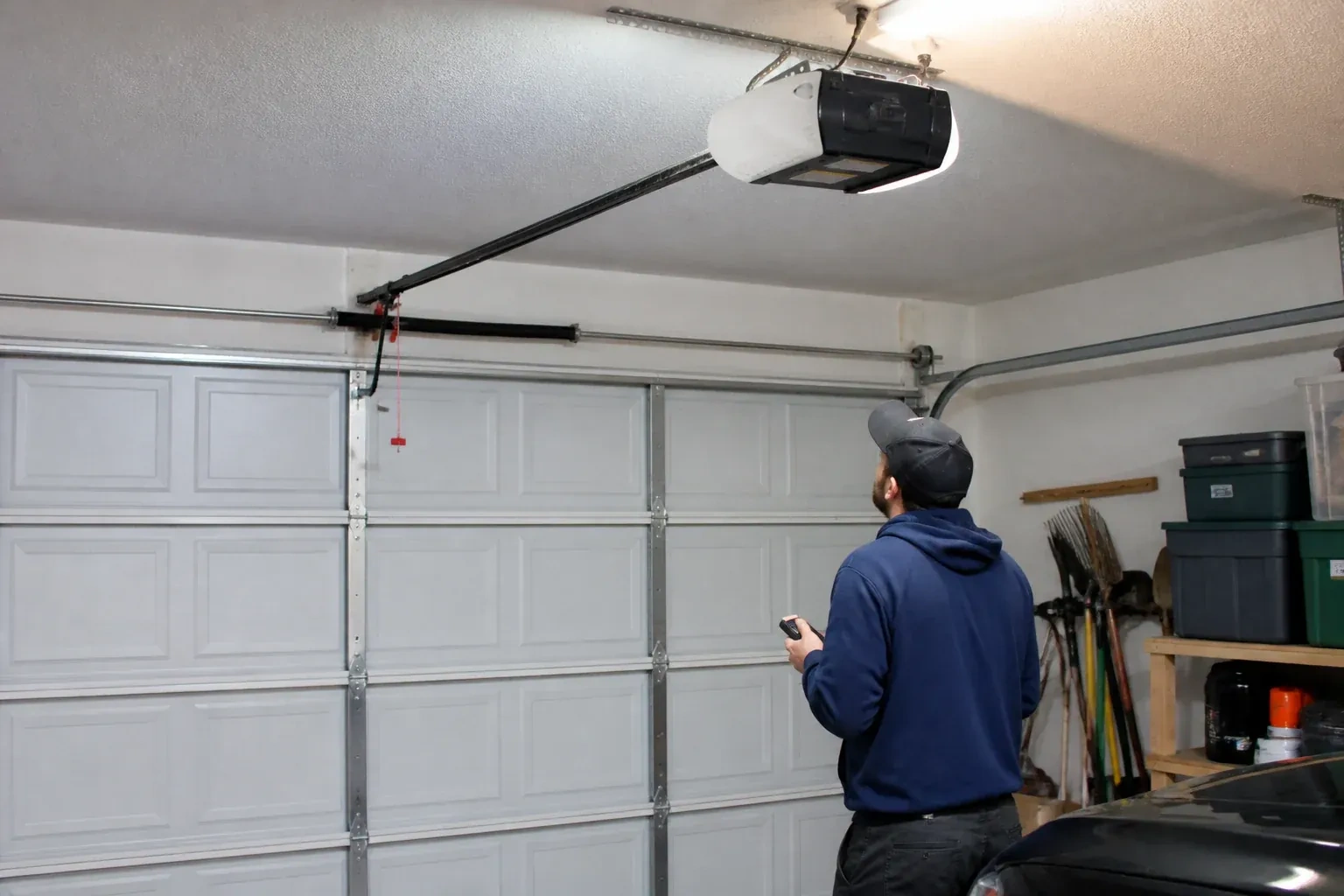
- Chain-Drive Opener RepairPress the button and the opener hums for a second, then quits.
- Belt-Drive Opener RepairThere is a new squeal from the front of the rail, up near the header, on every cycle.
- Garage Door Opener ReplacementSince the storm the door behaves oddly: it reverses halfway down for no reason, the light flickers…
Garage Door Remote and Keypad Programming near you
Whatever brought you to this page from Ramara, a door that stopped, a noise that started or a plan for a new door, the services below explain what we do about it. Repairs and maintenance, springs and hardware, openers and remotes, and new door installation are each covered in detail.